
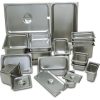
Grades of stainless (corrosion-resistant) steel: application and characteristics
Stainless steel brands have different characteristics that determine the scope of application of the final product. This type of alloy consists of alloy steel and chromium (content from 12%). In the manufacturing process, chromium oxide is created, which acts as a protective layer that prevents rusting.
Industrial productions use their marking of corrosion-resistant steel (stainless steel). The most popular brands are the 200, 300 and 400 series. Each of these series is divided into other types of alloys. Let’s consider each group separately.
300 series stainless steel
Products of this type may have a different composition of chemical components. According to this feature, they are divided into austenitic, austenitic-ferritic and austenitic-martensitic. The properties are determined by the percentage of elements aimed at strengthening, achieving plasticity and resistance to rust. Steel of the 300 series is one of the most popular due to its versatility. In turn, this series is divided into AISI 304, 316, 316T and 321.
AISI 304
It can be used in many areas of production, but it is most popular among manufacturers of food equipment. It is harmless to food and is characterized by resistance to temperature changes. Stainless steel 304 is easily welded and deformed. It is also used in the chemical and oil fields.
AISI 316
After adding molybdenum, 304 steel becomes 312. This component significantly increases corrosion resistance. The workpiece acquires the ability to withstand the effects of an aggressive acid environment and high temperature. The cost of the 312 series variant is more expensive than the 304th.
AISI 316Т
The composition of this steel contains a large amount of titanium, which makes the finished product extremely resistant to temperature effects and chlorine. The alloy is often used in welding systems, gas turbine blades, and other areas. The need for the alloy is due to its reasonable cost and excellent characteristics.
AISI 321
This type of steel is often used for equipment that welds well and can withstand temperatures up to 800 degrees. Most often, alloy 321 is used for the manufacture of seamless pipes, taps and other pipeline components.
400 series stainless steel
This type of metal is less versatile than the 300 variant. A large amount of chromium is used in the creation process. The final product contains a small percentage of other components. It has little carbon, which makes the final product more flexible.
AISI 430
Corrosion-resistant, acid-resistant steel contains a small amount of carbon, but a large percentage of chromium. This composition is chosen to achieve strength and plasticity. The finished product bends well and lends itself well to welding. It also resists an aggressive environment and temperature changes. It is most often used in the oil and gas industry. It can be used to finish building facades due to its attractive appearance.
200 series – AISI 201
This type of alloy can compete with the 300 and 400 series. The most popular option is AISI 201, which is characterized by an affordable price. Instead of nickel, manganese and nitrogen are used, which has a low price. The product’s popularity is due to its balanced chemical composition. The alloy is used to create components of medical and chemical equipment. It is most often used in the field of manufacturing pipeline elements.
Задайте питання або залиште коментар
і ми зв’яжемося з вами в найкоротші терміни
Пишіть, ми чекаємо