
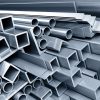
Steel: types by composition, structure, quality and purpose
Steel is an alloy of iron and carbon, which allows the final product to obtain high strength and other characteristics. Mankind began to produce options as early as 1800 BC. In ancient times, Indian steel and bulat were most popular.
Today, this product differs in such characteristics as composition, metal structure, quality and purpose. Let’s consider this topic in more detail.
Types of steel by chemical composition
Carbon and alloy steels are distinguished by their chemical composition.
- Carbon steel.
To obtain steel of this type, an alloy of iron and carbon is used without the addition of additional impurities. It is used to perform specific tasks. The finished product is also divided into three additional groups:
- Low-carbon – the carbon content is no more than 0.25%.
- Medium carbon – up to 0.6%.
- High-carbon – no more than 2%.
When carbon is added, flexibility decreases, but steel is used when the part must withstand high mechanical load, the influence of an aggressive environment and temperature. The main advantage of the alloy with the addition of carbon is the high strength and durability of the finished product.
- Alloy steel
Separately, we note that alloying is the addition of additional elements to the alloy that change (improve) the chemical and physical properties of the finished steel.
The name “alloy steel” is given to an alloy of iron and carbon with the addition of alloying components. The number of these elements determines belonging to a certain group:
- Low-alloyed – slightly more than 4% alloying components;
- Medium-alloyed – 4-11%;
- Highly alloyed – more than 11% of additives.
Chromium, nickel and molybdenum are used as additives. This makes it possible to obtain a harder and wear-resistant alloy.
Classification of steel according to the structure of the alloy
According to the structure of the metal, steel is divided into austenitic, ferritic, martensitic, bainite and pearlitic. Let’s consider each variety separately.
The austenitic variety of the alloy in the process of crystal formation creates a unique austenitic structure that looks like face-centered lattices. Such a structure is preserved after reaching a very low temperature. This product can be called austenitic steel.
Ferritic steel is made in the form of alloyed ferrite. Carbide is used as an additive. This type of product is created using a combination of carbon, iron and an alloying component.
Martensitic steel contains martensite, which has a needle-like structure. Carbon, a large amount of chromium, a little nickel, vanadium or molybdenum are also used as an additive. This alloy is used to create products resistant to alkali. The finished product made of martensitic steel is capable of self-hardening, has excellent flexibility and resistance to temperature effects.
Bainitic steel is an intermediate product created in the process of creating austenite. That is why it is often called intermediate. In the process of creating this product, alloying components and a small percentage of carbon are added.
Types of steel according to alloy quality
By quality, steel alloys are divided into four main groups: ordinary, high-quality, high-quality and especially high-quality. Let’s consider each variety.
Products made of ordinary quality steel have one main advantage – low cost. In the process of creating the workpiece, the presence of impurities and extraneous impurities that are not included in the initial recipe is allowed. Such steel has three additional types of quality: A, B and B (these letters are indicated in the marking). If there is no letter in the marking, then the product is automatically included in category A. This type of steel should not be used to create products that must withstand heavy and long-term loads.
Quality steel is created with more serious requirements in mind. Many impurities are not allowed in the composition. Also, the composition cannot contain more than 0.4% of sulfur and phosphorus. However, the output is a strong and durable material that, after being shaped, is able to withstand high loads. Melting of high-quality steel takes place in special converters and martens.
High-quality steel is created under conditions of high standards. The composition of the finished product should not contain unnecessary impurities – a little more than 0.003% of sulfur and phosphorus. The amount of carbon for the finished product is also reduced. Billets made of high-quality steel are cast in electric or acid type martens. From such steel, you can create a really strong product that can withstand mechanical loads for a long time. High-quality metal is characterized by a high viscosity index.
Extremely high-quality steel is created in the form of modern technologies. Additional elements that are part of the recipe are not allowed. The manufacturer strives to achieve perfect purity of the workpiece. Melting takes place inside an electric type furnace. The chemical composition does not contain gas or unnecessary components. In the labeling, the letter Ш is often indicated, which indicates the exclusivity of this material. The manufacturing process requires special equipment, which affects the cost.
Types of steel by purpose
According to the classification by purpose, the blanks are divided into instrumental, structural, stainless, heat-resistant and heat-resistant.
Structural alloy is used to create mechanisms or equipment components. This type of product is often used in the process of creating cars, planes or ships. In the process of selection, it became important to pay attention to its quality, reflected in the marking.
Tool steel is characterized by a carbon content of 0.7%. The percentage of phosphorus and sulfur in the alloy determines the level of product quality. The main advantages include a low price, sufficient hardness and low wear resistance. Carbon, alloy, roll, stamp and high-speed cutting types of this product are divided. It is used to create various tools – saws, hammers, cutters, etc.
The so-called “stainless steel” is characterized by its resistance to rust. Also, products made of this material perfectly resist an aggressive environment. The composition contains special anti-corrosion components – chrome or nickel. The chromium content determines the level of corrosion resistance. An ideal option for creating food equipment and other products that are constantly in contact with moisture.
Heat-resistant alloys are distinguished by their resistance to extremely high temperatures. The workpiece is very strong, which makes it possible to withstand high temperatures for a long time without changing its original shape. Such steel is used for components of steam turbines, boiler systems and rockets. In the production process, great attention is paid to the melting point, alloying and heat treatment.
Задайте питання або залиште коментар
і ми зв’яжемося з вами в найкоротші терміни
Пишіть, ми чекаємо